Moped-Tuning Life Police Chases & Cameras
Survive Blitzer, barricades, and helicopter pressure without looping away your bike.
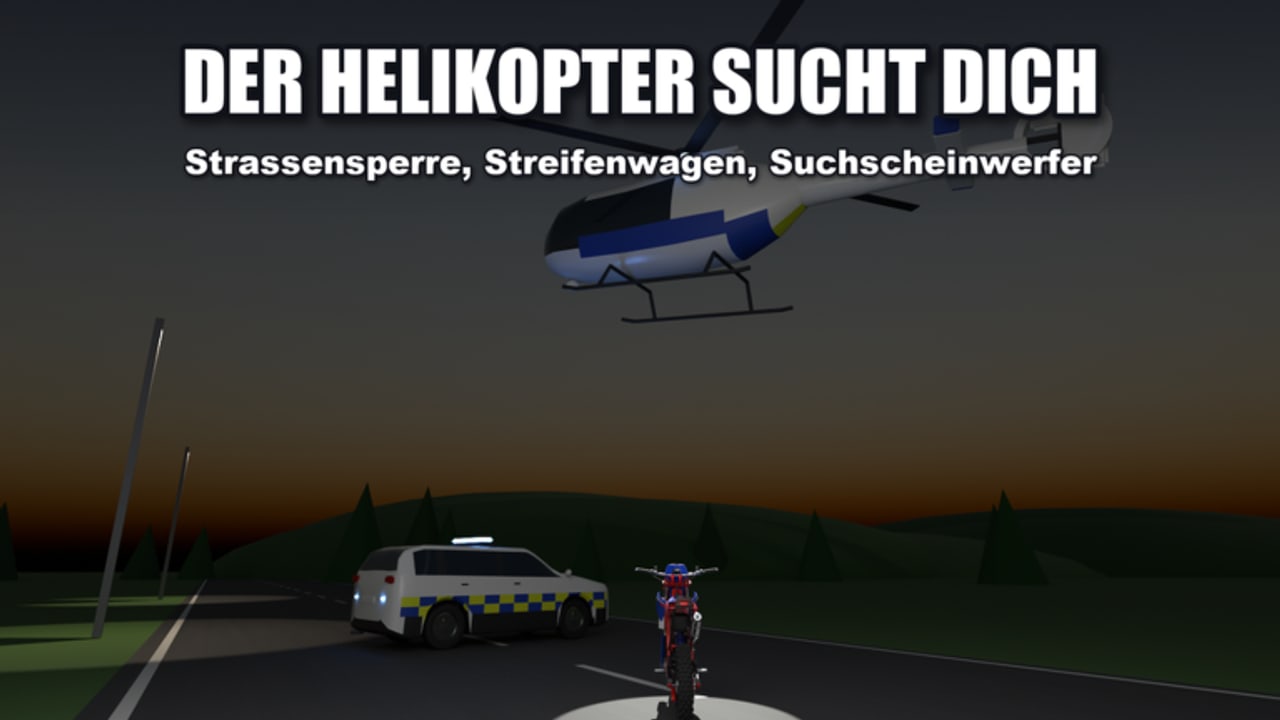
The open world in Moped-Tuning Life is not empty. Lewi748’s Roblox moped sim staffs the map with police tools: speed cameras (Blitzer), roadblocks (Strassensperren), and a helicopter you are meant to outsmart across city, village, lake, and Alpine pass roads. This police chase guide explains how those threats feel, when to brake versus commit to an escape, how Ctrl handbrake helps, and how wheelies and power tunes change the risk picture.
If controls are still fuzzy, read Controls first. New riders should complete Getting Started before treating pass roads like a chase simulator.
What the police toolkit includes
Official description highlights three pressure layers:
- Speed cameras — punish obvious speeding on watched stretches.
- Roadblocks — cut lines and force last-second decisions.
- Helicopter — aerial follow pressure that makes “just outrun them in a straight line” unreliable.
Together they push you to know the map, manage W throttle, and keep S and Ctrl ready. Chases are part of the fantasy; dying on every camera is optional.
Speed cameras: when to brake
Cameras reward anticipation more than horsepower. On approach:
- Spot the watched zone early — city entries and touristy pass segments are classic places to stay alert.
- Roll off W before the trap, not after the flash fantasy in your head.
- Use pulsed S braking to shed speed without locking into panic.
- Add a short Ctrl tap if you need a tighter stop in a crowded village street.
- Only reopen W when you are clear and the road ahead is readable.
Braking is correct when:
- You are still learning the route.
- Your tune is fresh and snappy after a lean-leaning jet change (fix that first — Tuning Guide).
- A roadblock sits just beyond the camera.
- You are mid-wheelie and cannot steer cleanly.
Escaping at full chat past every camera sounds brave and often ends in a helicopter story you did not want.
Roadblocks: read, don’t invent
Barricades appear to break rhythm. Options:
- Early brake and divert — best default. Use A/D onto a side street or shoulder you already know.
- Controlled slowdown — S plus Ctrl to rotate into a gap without looping.
- Commit past — only with clear space, known grip, and no oncoming surprise.
Never discover a new Switchback wheelie trick into a barricade (save tricks for Wheelie Tricks). Roadblocks punish divided attention. If you must choose between style points and a clean exit, take the clean exit — currency and piston health matter more (Make Money).
Helicopter pressure on Alpine roads
The helicopter exists to stop pure straight-line solutions. On pass roads:
- Prefer line knowledge over peak dyno numbers. A rider who knows hairpins sheds attention faster than one who only knows W.
- Break visual predictability: village alleys, tree cover near the lake, and elevation changes beat endless crest sprinting.
- Do not stare at the sky. Glance, then return eyes to the exit curb.
- If you are lost, slow down. Low-speed competence beats high-speed confusion under aerial watch.
Helicopter chases are when over-tuned lean motors feel worst — power arrives in spikes, the front lifts when you did not ask, and a Shift twitch becomes a loop. Richen or revert if the bike became unrideable after your last shop visit.
Brake versus escape decision tree
Use this quick mental model:
| Situation | Bias |
|---|---|
| Unknown road + camera ahead | Brake |
| Known shortcut beside roadblock | Divert |
| Clear lake straight, no aerial yet | Controlled speed, not redline spam |
| Helicopter + tight hairpins | Slow, precise, patient |
| Fresh after milling/jet change | Brake more; verify handling first |
| High wheelie level practice session | Avoid chase bait entirely |
Escape is a tool, not a personality. The players who “always flee” crash into the same barricade twice; the players who “always brake” never learn pass flow. Balance both.
Handbrake tips in chases
Ctrl shines in police scenarios:
- Short taps to rotate into a gap without a wide A/D sweep into barriers.
- Quick scrub of speed when S alone is not enough before a camera.
- Wheelie abort helper — settle the rear, front down, then decide brake or flee.
Mistakes:
- Holding Ctrl through a fast sweeper — spins you into oncoming space.
- Handbrake + full W — drama, not escape.
- Handbrake mid-No-Hander practice when a camera is ten meters ahead — put hands and wheels where they belong.
Rehearse Ctrl stops in empty village streets during calm sessions (Controls) so muscle memory works when the helicopter audio spikes.
Wheelies during heat
Sparks look great on a chase clip and are a bad idea when Blitzer and barricades are active. Rules of thumb:
- No trick attempts under helicopter attention.
- If you are already in a wheelie when heat starts, set it down with S/Ctrl before the next corner.
- Save longest-wheelie leaderboard runs (L) for quiet lake time, not wanted time.
Wheelie progression still matters for overall skill — just schedule it off-chase via Wheelie Tricks.
Power tunes and chase manners
A 100ccm-class build (or the louder rocket fantasy the game markets) escapes differently than a stock Fantik or Simsen:
- More power means easier accidental lifts into Shift territory.
- Tall sprockets may help pass straights but hurt alley launches away from roadblocks.
- Always re-check the Prüfstand with P after changes so you know what punch to expect mid-chase.
If chases feel impossible after a shopping spree, you did not “get worse at police” — your delivery changed. Fix jetting, then retry.
Map-specific notes
- City — densest cameras and sudden blocks; prioritize brake-and-divert.
- Village — narrower feel; Ctrl pivots matter.
- Lake — space to breathe; do not gift the helicopter a five-kilometer visible straight if you are already hot.
- Alpine pass roads — commitment corners; unfinished braking zones are deadly. Learn them at touring speed first (Getting Started).
After the heat cools
- Stop in a safe area.
- Inspect whether you need repairs or a richer jet.
- Dyno if something feels off.
- Resume earn loops without immediately re-baiting police (Make Money).
- Skim Updates if chase behavior suddenly changed after a patch.
Police in Moped-Tuning Life are a skill check for throttle manners. Cameras teach restraint, roadblocks teach vision, and the helicopter teaches route craft. Brake when uncertain, escape when the line is real, and keep Ctrl ready — your piston and your wallet will last longer.
Related guides
- Controls — S, Ctrl, W under pressure.
- Wheelie Tricks — practice off-chase.
- Getting Started — learn the map cold.
- Tuning Guide — power that you can still ride.
- Make Money — stop wasting sessions on crashes.
For dedicated aerial tactics and Alpine-pass shedding under rotor heat, continue with Helicopter Escape and orient landmarks via the Alpine Map guide.
Frequently Asked Questions
Quick answers to the most common questions.
What police threats exist in Moped-Tuning Life?
The open world includes speed cameras, roadblocks, and a helicopter across city, village, lake, and Alpine pass roads. Learn each threat separately before combining them at full race pace.
Should I always outrun the police?
No. Brake for unknown camera approaches and divert around roadblocks when a safe side route exists. Straight-line fleeing fails more often once the helicopter joins.
How does the handbrake help in a chase?
Ctrl taps scrub speed and help rotate into gaps. Do not hold Ctrl through high-speed sweepers or combine it with full throttle — that creates spins, not escapes.
Can I wheelie while escaping?
You can, but you should not while cameras, barricades, or the helicopter are active. Set the front down, regain steering, then escape or brake with both wheels available.
Why are chases harder after I tuned?
Stronger cylinders and lean-leaning jets make throttle spikier, which causes accidental lifts and loops. Dyno with P, richen if needed, and relearn the bike before baiting Alpine police again.